Category: study

  • Documentary Photography Self-Study Blog #3

    Tank Man and The Photo League

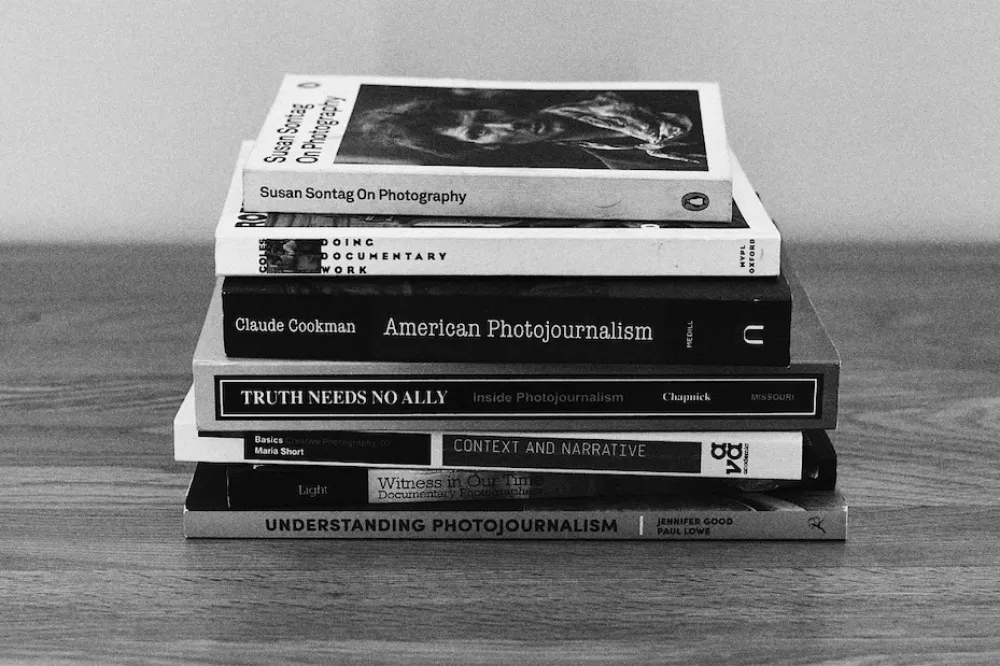
    A stack of documentary photography text books

    This is the third blog post in a series about self-studying Photojournalism and Documentary Photography.


    I’m adding these three posts from my old blog, they add context to my current method of studying, and they may prove helpful for others self-studying. This is the third (and final retrospective) post of the three. My process of studying changed as I figured out what works best for me. This post brings me almost up-to-date.


    It’s been two years since I started self-studying documentary photography and photojournalism, and this is only my third blog post. Not a stunning start. For nine months, I worked on the Professional Photography Course at the London Institute of Photography—maybe more of that later—so there is some mitigation. However, I am more than a little disappointed with my progress.

    The Method

    If you’ve read the earlier posts, you may remember that I’d decided to work as closely as possible to the London College of Communication BA in Photojournalism and Documentary Photography syllabus. It felt like an artificial framework almost immediately, without a tutor to guide me. I spent almost as much time deciding which sections of the textbooks best related to each unit of the course as actually studying.

    At some point last year, I gave up. I copied all the notes about Jennifer Good and Paul Lowe’s Understanding Photojournalism into a new document and started afresh. This time, working through the book from beginning to end, as simple as that.

    It was refreshing to have such a simple guide to follow. This probably says more about me than which approach might suit you. I’ve realised I like a clearly defined path to follow. I had to remind myself more than once that I’m doing this for enjoyment. There’s no exam at the end of it. In fact, it’s unlikely that anyone else will ever read my nearly eighty pages of notes. So, why not do it in a way that suits me?

    I mentioned in an earlier post that I was writing my notes in Evernote. I’m now using Google Docs for several reasons, one of which is that Docs automatically creates an outline based on the hierarchy of headings used. This made it very easy to reference earlier notes as I was writing.

    Was it worth it?

    Yes, it was definitely worth it. I now know far more about the history of documentary photography and individual photojournalists than I did. It’s also given a greater clarity and context to the knowledge that I did have.

    Tank Man by Stuart Franklin.
    Photograph by Stuart Franklin/Magnum

    At several points along the way, I headed down huge rabbit holes. One such was an investigation into the story of Tank Man. I became fascinated by the stories of the five photographers who shot the same scene from slightly different viewpoints and, of course, the Tank Man himself. In fact, I started writing a long blog post about it and what I’d found. That was until I found Patrick Witty’s definitive post on his blog, Field of View.

    I’ve since become a subscriber to Field of View. Whether you opt for the free or paid versions, I’d highly recommend it. Witty, a former photo editor at The New York Times and International Picture Editor at TIME, amongst other roles, has a level of knowledge and experience few others can match. As with the Tank Man article, he’s often interviewed some of the photographers involved firsthand.

    Studying has prompted me to put down my page-turner thrillers and read the biographies of Lynsey Addario (excellent); Marie Colvin by the inspirational Lyndsey Hilsum (also excellent), Ben Bradlee (good, although far from impartial); Clarissa Ward (a page-turner itself), and Diane Arbus (there is SO much to say!).

    What’s Next?

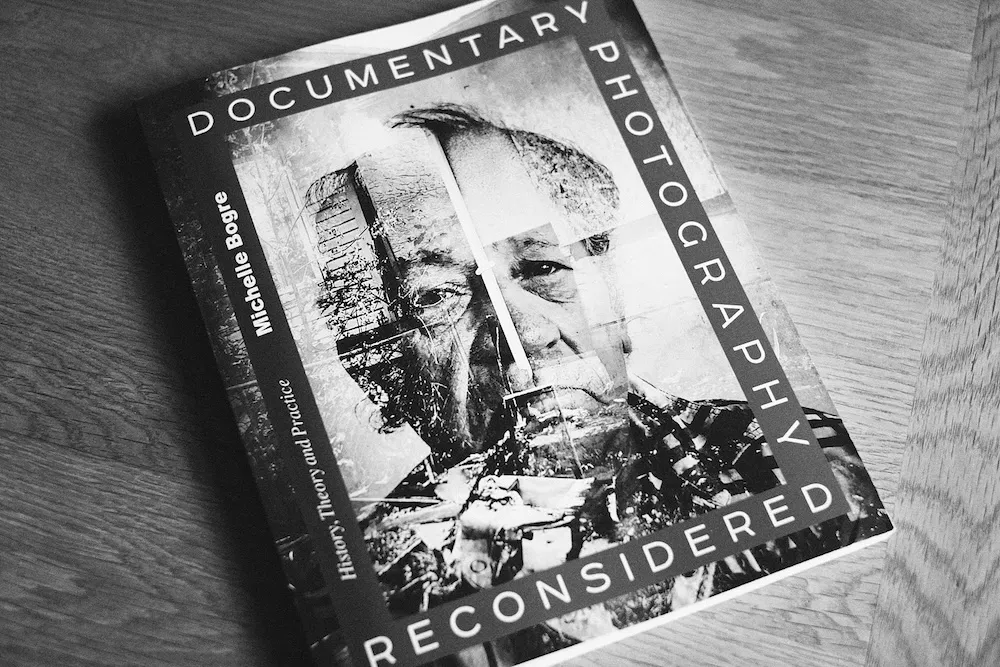
    My studying days are not over. I have Michelle Bogre’s ‘Documentary Photography Reconsidered: History, Theory, and Practice’, which I’ve barely opened. I will work through that in the same way. After that, my current plan is to turn my focus to a photographer or an important event and study that more independently. High on that list is The Photo League – see below. I now better understand how to study in a way that suits me.

    One thing I’ve learnt this month year

    Boy on the Roof, Pitt Street, New York, 1938 by Walter Rosenblum
    Boy on the Roof, Pitt Street, New York, 1938 by Walter Rosenblum.

    I’m embarrassed to say I knew nothing of the Photo League. Founded in 1936 by Sol Libsohn and Sid Grossman, the Photo League was a cooperative of photographers based in New York who shared an ethos around a range of social causes. The league championed socially conscious photography.

    Some of the most renowned American photographers of the time were either members or supporters of the Photo League. This included Lisette Model, Margaret Bourke-White, W. Eugene Smith, Helen Levitt, and FSA photographer Arthur Rothstein. The list includes the next generation of photographers, including Richard Avedon and Robert Frank.

    In 1947, during the post-war McCarthyist communist paranoia, the Photo League was prescribed an anti-American communist organisation, and it folded in 1951.

    There’s a short history of the Photo League on the Morris Engel archive. It mentions a documentary, Ordinary Miracles: The Photo League’s New York, but I haven’t found a copy in the UK. It’s available on Amazon Prime in the US.

    Throughout my studies, I have continued updating my list of Documentary Photography: Courses, Documentaries & Talks, which may be helpful.

    Until next time. If you have any questions, comments, or suggestions, get in touch.

  • Documentary Photography Self-Study blog #2

    A photography textbook, Documentary Photography Reconsidered: History, Theory and Practice by Michelle Bogre.

    This is the second blog post in a series about self-study in general and, in particular, furthering my education in Photojournalism and Documentary Photography.

    Note: I’m adding these three posts from my old blog, they add context to my current studying methods and my prove helpful for others self-studying. My process of studying changed as I figured out what works best for me. The process I outline here isn’t the way I’m studying now.

    This month, nothing highlighted the cavernous gap in my knowledge of photojournalism quite as much as my almost complete ignorance of the work of Philip Jones Griffiths, but more of that later.

    The Goal

    I’m basing my study around the outline for the London College of Communication (LCC) BA in Photojournalism and Documentary Photography. My intention is to apply for the course when time and money permit (which, in this context, are the same thing). I’m adding relevant resources to that blog post as I find them.

    This Month

    I didn’t achieve as much as I’d hoped – although I do need to keep reminding myself that I’m not writing to a deadline, there isn’t a tutor waiting, red pen in hand. I think some of that pressure comes from the fact that I’m not working to a deadline. I am conscious that nothing prevents me from just deciding not to do this any longer. I guess I’m trying to prove something and stop myself from taking that easy option.

    Unit 2: Practical Documentary Photography & Photojournalism

    “This unit will introduce you to the skills and knowledge required to identify, research, shoot and edit a series of photographic images within particular genres of documentary and photojournalistic image-making.”

    Book: Understanding Photojournalism, Chapter 1 – What is Photojournalism

    I continued reading around the themes raised, attempting to answer, ‘What is Photojournalism’, which isn’t as obvious a question to answer as you may first think.

    Pages from a photography textbook, Documentary Photography Reconsidered: History, Theory and Practice by Michelle Bogre.

    Book: Documentary Photography Reconsidered: History, Theory and Practice by Michelle Bogre

    The plan is to work through the chapters relevant to the Unit. Unfortunately, I didn’t have a copy of the book when I needed it (I’ve since received a copy for my birthday), so I’ll return to that once I’ve finished Unit 3.

    Book: Witness in Our Time: Working Lives of Documentary Photographers

    I explored the work of several of the featured photographers, but I was particularly fascinated by the life of the incredible Hansel Mieth. She seemed like such a ballsy woman, someone I’d loved to have met. There’s a great documentary on Vimeo if you’re interested.

    Unit 3: Histories & Theories of Photojournalism & Documentary Photography

    “This unit introduces you to the key historical and social issues surrounding photojournalism and documentary photography from their earliest stages to the present day.”

    Book: Understanding Photojournalism, Chapter 2 – History and Development of Photojournalism

    There is so much to explore in the history of photojournalism; a single chapter cannot give more than the broadest overview. Several times, I found myself disappearing down the inevitable rabbit holes. For a newspaper junkie like me, it was intriguing to see the first photograph ever published in a newspaper—the New York ‘Daily Graphic’, in 1880. I also found myself counting cannonballs in the Valley of the Shadow of Death, and no, I’m still not sure which image came first.

    I’ve made a note to delve deeper into the work of Jacob Riis and Lewis Hine, but the greatest inspiration most certainly came from the work of Philip Jones Griffiths.

    A portrait of Philip Jones Griffiths in Bali made in 2000 by Cantikfotos.

    One thing I’ve learnt this month

    I’m genuinely ashamed to say, as someone who considers themselves immersed in the world of documentary photography, I didn’t know the work of Philip Jones Griffiths whatsoever.

    Philip was a Welsh-born photojournalist and pacifist principally known for his work in Vietnam during the war; he also worked in the UK and Cambodia.

    His best-known book, Vietnam Inc., is widely regarded as one of the most honest portrayals of the Vietnam War. Eugene Richards describes it as “one of the books of the 20th Century.”

    There are two excellent documentaries on Vimeo about Jones Griffiths. One made by his long-term partner Donna Ferrato, shot days before he died (above) and the other (below) by the Philip Jones Griffiths Foundation.

    After his death, John Pilger wrote:

    “I never met a foreigner who cared as wisely for the Vietnamese, or about ordinary people everywhere under the heel of great power, as Philip Jones Griffiths. He was the greatest photographer and one of the finest journalists of my lifetime, and a humanitarian to match. His photographs of ordinary people, from his beloved Wales to Vietnam and the shadows of Cambodia, make you realise who the true heroes are. He was one of them.”

    Throughout my studies, I have continued updating my list of Documentary Photography: Courses, Documentaries & Talks, which may be helpful.

    Until next time. If you have any questions, comments, or suggestions, get in touch.


    Related Posts

    Documentary Photography Self-Study Blog #3

    This is the third blog post in a series about self-study in general and, in particular, furthering my education in Photojournalism and Documentary Photography. It’s been two years since I started self-studying documentary photography and photojournalism, and this is only…

    more…

    Newspaper Movies: An Ongoing List

    This is my ongoing list of movies about newspaper journalism and photojournalism. It includes dramas and documentary films set in newspaper offices or featuring journalists. This is the list of films I’ve discovered so far and will add more films…

    more…

    Documentary Photography Self-Study blog #2

    This is the second blog post in a series about self-study in general and, in particular, furthering my education in Photojournalism and Documentary Photography. This month, nothing highlighted the cavernous gap in my knowledge of photojournalism quite as much as…

    more…

    Something went wrong. Please refresh the page and/or try again.

  • Documentary Photography Self-Study Blog #1

    A documentary photography text book, notebook and pen.

    This is the first blog post in a series about self-study in general and, in particular, furthering my education in Photojournalism and Documentary Photography.

    Note: My process of studying changed as I figured out what works best for me. The process I outline here isn’t the way I’m studying now.

    At some point in mid-2021, I was feeling a little discouraged by not being able to work on the projects I’d been planning. So, I turned my attention to improving my knowledge about the field of documentary storytelling in general.

    I know the structure of crafting a photo story, and I think my ethics are well-tuned; maybe we all do? Are my instincts correct? Is the way I tackle a project the best approach? These are some of the questions I hope to answer. I’m also interested in learning more about the history of photojournalism.

    I’ve been working on projects for a few years; I’ve attended some excellent short courses, including the highly recommended Missouri Photo Workshop. But I’ve never undertaken any long-term formal education in the subject – a situation I’m determined to remedy at some point.

    So, self-education, how easy and valuable is it in reality? I’m going to document my process for two reasons. Hopefully, it will prove helpful to others – even if it becomes a guide on how not to proceed.

    A text book, pen and glasses.

    The Start

    It started a little haphazardly. I bought a few books, some good, some not so much. I watched Matt Black: The Documentary Commitment, which I would recommend, more of that to come. In the process, I have created a list of resources that I’ve shared here, which might be helpful. All good as far as it goes, but I needed some structure.

    Then, something led me to watch the recording of last year’s online open day for LCC’s Photojournalism and Documentary Photography BA. It’s a well-regarded course and one I’d like to apply to at some point. I realised that on the LCC website is a detailed outline of the BA course. Could this be the guide I’d been looking for!

    I have broken down the outline and started adding resources that seem to fit the various units of the course. You’re joining me almost at the beginning of this journey. I intend to add to the outline as I discover different resources.

    Jennifer Good, the LCC BA Course Leader, and Paul Lowe, a tutor and highly respected photojournalist, have published ‘Understanding Photojournalism‘. The book chapters closely mirror the BA course units – I’m taking this as my starting point.

    I’m going to blog – maybe monthly – so you can see how I’m getting on. (Plus, writing the blog will give me an excuse to not study when I need one!)

    A few caveats I feel obliged to include:

    • I’ve only been working on it for a few weeks. As I go on, I’ll probably find that some of the resources I include would be better off as part of a different ‘unit’.
    • Working as I am is no substitute for guidance from a qualified tutor. If I had the money/time, I’d be applying for the BA now.
    • I’m not a tutor; I am literally making this up as I go along.

    Method

    It’s been a long time since I’ve undergone any formal education, and without a tutor on call, I wasn’t sure of the best way to proceed.

    I started writing longhand in a notebook. Although I enjoyed the process of writing my notes, and apparently, we absorb more information if we write notes by hand, I soon realised I should have started digitally. Particularly as I’m still discovering how best to do this, the convenience of being able to go back and easily edit is invaluable. So last week, I took a few days to type up the notes I’d made so far. I’m glad I made that decision early in the process.

    I’ve fallen into working by reading each chapter and underlining relevant sections in the book as I go. Then I reread it and typed up my notes. I’m using Evernote, although I’m sure any note-taking app will work. Evernote allows me to insert images, PDFs and even YouTube videos. There’s a free version of Evernote that does everything you need.


    Progress so far

    I started reading the book before finding the outline, so I didn’t have a structure set up. Although I’d read through a few chapters, as I’m not working to a timetable, I’ve gone back to the beginning, writing more detailed notes.

    Hopefully, I’ll still be as keen this time next month so I’ll let you know how it goes. If you have any questions, comments or suggestions, get in touch.


    One thing I’ve learnt this month

    I’ve always been a fan of David Hockney’s joiners, always imagining they were nothing more than wonderful collage images. I hadn’t realised Hockney was addressing the ‘problem’, as he saw it, of the passing of time in a photograph.

    When you photograph a scene, you capture the whole area of the image at the exact moment (within fractions of a second). When we look at a scene, our eyes move around it, viewing different areas at different times. Hockney’s ‘joiners’ answer that problem; he talks about it in this video.

    Throughout my studies, I have continued updating my list of Documentary Photography: Courses, Documentaries & Talks, which may be helpful.

  • Documentary Photography: Self-study Outline

    A stack of documentary photography text books

    At some point early in 2021 (mid-COVID-19), I was feeling a little discouraged by not being able to work on the projects I’d been planning. So, I turned my attention to improving my knowledge about documentary storytelling in general.

    The full story is in this blog post, but to cut a long story short. I’ve taken the course outline from LCC’s Photojournalism and Documentary Photography BA, which I’ve added below. I’m adding resources that seem to fit the various units as I find them. To date, I’ve added the reading I’m proposing up to the start of year 2. I’m sure my thoughts on this will change as I work. The plan is to update this page as I go along.

    I’m aiming to blog about it, just to let you know how it goes. If you have any suggestions in relation to any of this, please get in touch.

    (updated: 23 April 2022)

    Year 1

    Unit 1: Introduction to Photojournalism and Documentary Photography

    “This unit acts as an introduction to the course and to your subject specialism. Topics covered include effective learning and studentship at undergraduate level as well as introducing basic technical skills.”

    The effective learning aspect of this unit is where I first fell down (blog post). Naively, however,I feel as though I’ve got the ‘basic technical skills’ aspect covered.

    Unit 2: Practical Documentary Photography & Photojournalism

    This unit will introduce you to the skills and knowledge required to identify, research, shoot and edit a series of photographic images within particular genres of documentary and photojournalistic image-making.

    The text I’ve found that seems most appropriate:

    • Book: Understanding Photojournalism, Jennifer Good and Paul Lowe
      • Chapter 1 – What is Photojournalism
    • Book: Documentary Photography Reconsidered: History, Theory and Practice, Michelle Bogre
    • Book: Witness in Our Time: Working Lives of Documentary Photographers.
      I’ve so far explored the chapters on:
      • Hansel Mieth (1909–1998), by far the most inspiring chapter so far. She seemed like such a ballsy woman, someone I’d loved to have met. See Documentary Photography Self-Study blog #2 for a link to the Vimeo documentary.
    • Walter Rosenblum (1919–2006): It’s very interesting to read about The Photo League, which I need to delve into further.
    • Michelle Vignes (1928-2012): This chapter is a little disappointing as it exclusively talks about Vignes as a documentarian during the early days of Magnum, but not as a photographer in her own right.

    Unit 3: Histories & Theories of Photojournalism and Documentary Photography

    This unit introduces you to the key historical and social issues surrounding photojournalism and documentary photography from their earliest stages to the present day.

    The texts:

    • Book: Understanding Photojournalism, Jennifer Good and Paul Lowe
      • Chapter 2 – History and Development of Photojournalism
      • Chapter 4 – Photojournalism Today
    • Book: Documentary Photography Reconsidered: History, Theory and Practice, Michelle Bogre
      • Chapters to be added.

    Unit 4: Documentary Storytelling

    “This unit helps to develop the knowledge and skills necessary to produce a documentary storytelling project. It will examine contemporary ways of using images for storytelling and help you develop an understanding of visual and narrative structure.”

    The texts:

    • Book: Understanding Photojournalism – Jennifer Good and Paul Lowe
      • Chapter 3 – The Single Image and the Photostory

    Unit 5: Moving Image

    “This unit will train you in the skills of basic moving image/film-making within a photojournalism and documentary photography context. You will be supported by expert tutors in developing content and technical skills, resulting in the production of your own short film.”

    This should be really interesting, I know very little about the process of video documentary practice, although I’m very keen to experiment.

    Unit 6: Media Ethics & Media Law

    “This unit will introduce media theories that underpin and help us to understand the role of communication systems, modes of representation and systems of meaning. You will learn about the main media laws that affect the work of photojournalists and documentary photographers.”

    The texts:

    • Book: Understanding Photojournalism – Jennifer Good and Paul Lowe
      • Chapter 5 – Power and Representation
      • Chapter 6 – Ethics

    Year 2

    Unit 7: Contemporary Documentary 1

    “This unit will help you to develop the theoretical knowledge and practical skills necessary to produce a documentary project and associated theoretical research. You will be encouraged to go beyond traditional narrative documentary approaches and to look at ways in which to disrupt expectations about storytelling and start to embrace experimental narratives and structures.”

    The texts:

    • Book: Understanding Photojournalism – Jennifer Good and Paul Lowe
      • Chapter 7 – Aesthetics
      • Chapter 8 – A Network of Trusted Witnesses

    Unit 8: Elective Unit

    The Elective unit provides a choice of stimulating conceptual and practical projects that will compliment the core units of your course.

    Unit 9: Contemporary Documentary 2

    “In this unit, you will further develop the knowledge and skills necessary to produce an in- depth documentary project and associated research. The unit is designed to encourage you to think holistically about the theoretical, philosophical and subjective aspects of documentary photography in relationship to the development of your own practice.

    Unit 10: Reading & Writing Practice

    This unit explores the practices of reading and writing within, around and about photojournalism and documentary photography. The unit culminates in the submission of a Dissertation Proposal, and you will also create an analytical reading journal that records and articulates your engagement with literature in a personal way.

    Year 3

    Major Project part 1

    In this unit you will begin the exploratory process of researching and making visual work towards your final major project. You will begin to develop a written proposal, complete a risk assessment and begin to make work that will be further developed in the Major Project Part 2 unit.

    Major Project part 2

    This unit requires the consolidation of your Major Project and its presentation in an appropriate form which will be negotiated with tutors and can encompass, for example, a portfolio of photographic prints, multimedia piece or a photographic monograph.

    Dissertation

    “In this unit you will write an extended written essay and will work closely with selected supervisors to present a substantial research project.

    Contemporary Professional Practice

    This unit asks you to consider your future goals and how to best prepare yourself for your career after university. You’ll do extensive research into your chosen career field, produce a web presence, a creative identity package and an interview with a relevant professional.

    If you have any suggestions in relation to any of this, please get in touch.